

SPHERE and Trusted CI Collaborate to Strengthen Research Security
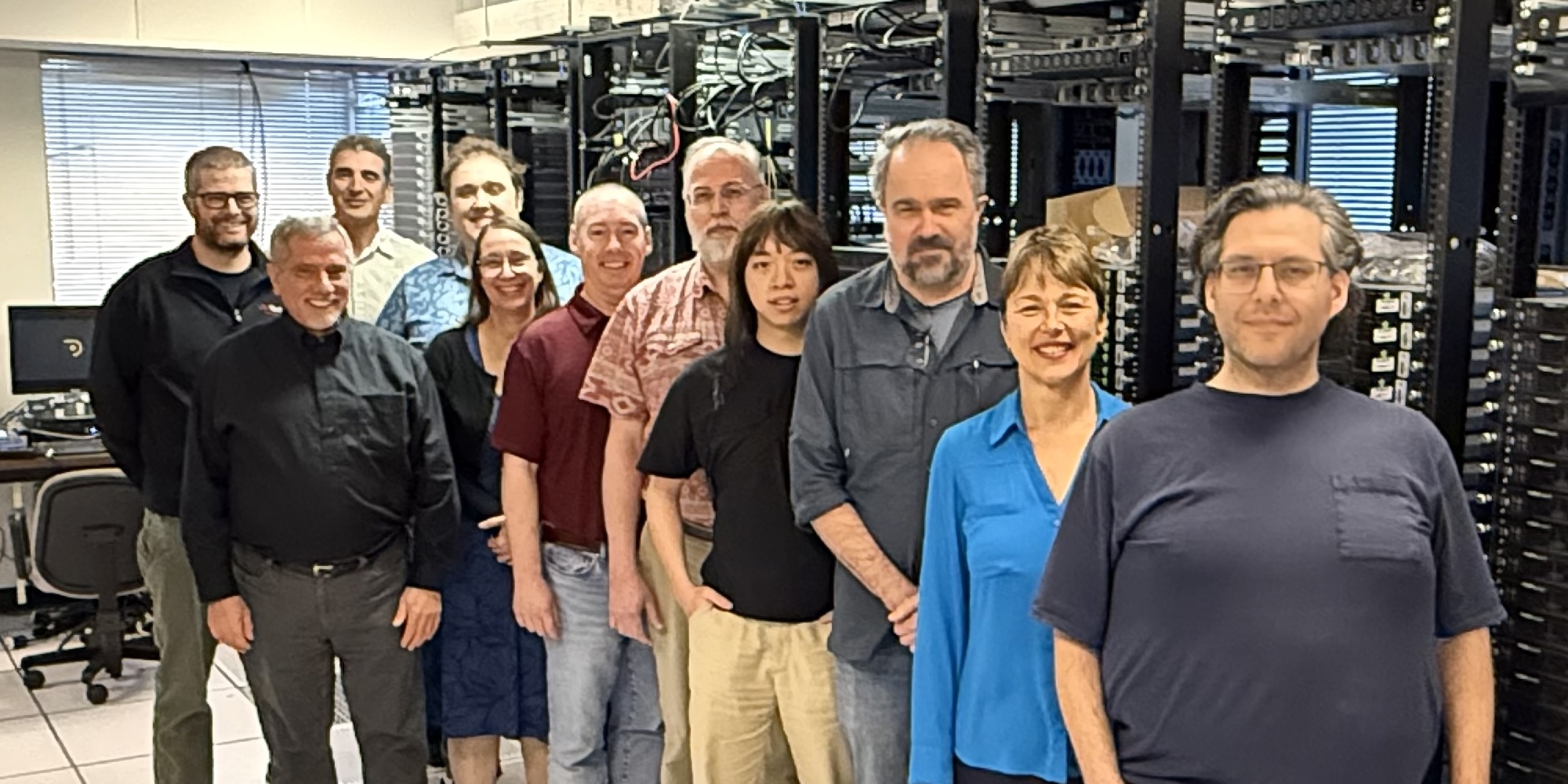
In February 2026, the NSF-funded Security and Privacy Heterogeneous Environment for Reproducible Experimentation (SPHERE) project hosted a week-long cybersecurity residency with Trusted CI, the National Science Foundation’s Cybersecurity Center of Excellence. The residency marked an important milestone in SPHERE’s transition from construction toward sustained operations, strengthening an already robust security posture through formal alignment with widely recognized best practices.
SPHERE previously partnered with Trusted CI during the 2024 Trusted CI Framework Cohort, where the SPHERE team adopted the Trusted CI Framework and completed a structured self-assessment of its cybersecurity program against the framework’s 16 Musts. The Musts identify the concrete, critical requirements for establishing and running a competent cybersecurity program. That cohort experience validated SPHERE’s foundational approach to security, while also highlighting an important next step: formally adopting a baseline cybersecurity control set and performing a gap analysis between that baseline and SPHERE’s existing controls. The Trusted CI Framework specifically recommends adoption of a recognized baseline control set in its Must 15.
Building on that groundwork, the February 2026 residency embedded Trusted CI staff directly with the SPHERE DevOps team for one intensive week at the USC Information Sciences Institute in Marina del Rey, CA. Working side by side, the teams aligned SPHERE’s existing cybersecurity controls with the CIS Critical Security Controls (CIS Controls v8), which SPHERE has now formally adopted as its baseline control set.
This work focused on mapping SPHERE’s existing practices to the CIS Controls, identifying gaps, and prioritizing future improvements. The residency also strengthened SPHERE’s alignment with NSF’s evolving expectations for research security, including closer alignment with the NSF Research Infrastructure Guide (RIG) and its set of 14 critical controls. By grounding its program in both the Trusted CI Framework and the CIS Controls, SPHERE gained a common language for documenting controls, reduced reliance on ad hoc decision-making, and ensured consistency with broadly accepted community standards.
During the residency, Trusted CI conducted site visits at all the sites that host SPHERE physical infrastructure. They visited the ISI and USC server rooms, and met virtually with SPHERE co-PIs and their teams at Northeastern University Khoury College of Computer Sciences and the University of Utah Kahlert School of Computing. These discussions helped ensure that SPHERE’s distributed architecture is protected in a coordinated and consistent manner across institutions.
With the gap analysis complete, SPHERE is well positioned to prioritize future security investments as it moves toward full operations. The outcome directly supports SPHERE’s core mission of enabling realistic and reproducible experimentation without compromising trust in the facility or the science it supports. Achieving this mission requires protecting the underlying infrastructure from attack and security breaches, safeguarding the integrity and availability of shared resources, and ensuring strong isolation and protection of researcher experiments and data.
SPHERE will share lessons learned from the residency with the broader Trusted CI Research Infrastructure Security Community (RISC), contributing back to the ecosystem that helped shape its approach.
SPHERE (Security and Privacy Heterogeneous Environment for Reproducible Experimentation) is an NSF Mid-scale Research Infrastructure-1 project (Award #2330066) spanning USC Information Sciences Institute, Northeastern University, and the University of Utah. SPHERE provides a public testbed for reproducible science and experimentation tailored to the needs of cybersecurity and privacy researchers and educators.
Trusted CI, the NSF Cybersecurity Center of Excellence, is supported by the National Science Foundation under Interagency Agreement #A2407-049-089-064206.0. Trusted CI’s mission is to enable trustworthy NSF science by partnering with cyberinfrastructure operators to build and maintain effective cybersecurity programs, publishing resources for the broader NSF community, and advancing the processes, tools, and knowledge needed to secure research progress.